
Impact on biodiversity

Historically, the fur trade has driven severe biodiversity loss, contributing to species declines and even extinctions, including that of the sea mink.

As a stark example of the industry’s environmental legacy, many big cat species — along with numerous smaller wild cats — are now classified as threatened or endangered and are legally protected from exploitation, in part due to historic overhunting for the fur trade.

Today, American mink and raccoon dog are ranked among the most problematic invasive alien species in Europe, largely as a result of escapes from fur farming operations.

Trapping

Trapping poses a serious threat to wildlife populations. The traps used to capture wild animals are highly indiscriminate, often trapping non-target species — some of which are classified as endangered or threatened — causing injury or death. As a result, trapping can place additional pressure on already vulnerable animal populations.

According to the American Veterinary Medical Association, non-target animals — referred to as “trash” animals by the industry — can make up as much as 67% of the total catch.

escaped animals

American mink, raccoon dogs, muskrats, and coypu are non-native species that were deliberately introduced to Europe for fur farming and have since established wild populations. As invasive alien species, they pose a serious threat to biodiversity and are recognised as such under the Convention on Biological Diversity. All four species are included in the DAISIE database’s list of Europe’s 100 worst invasive alien species. A Danish study estimated that 80% of free-roaming mink originated from fur farm escapes.

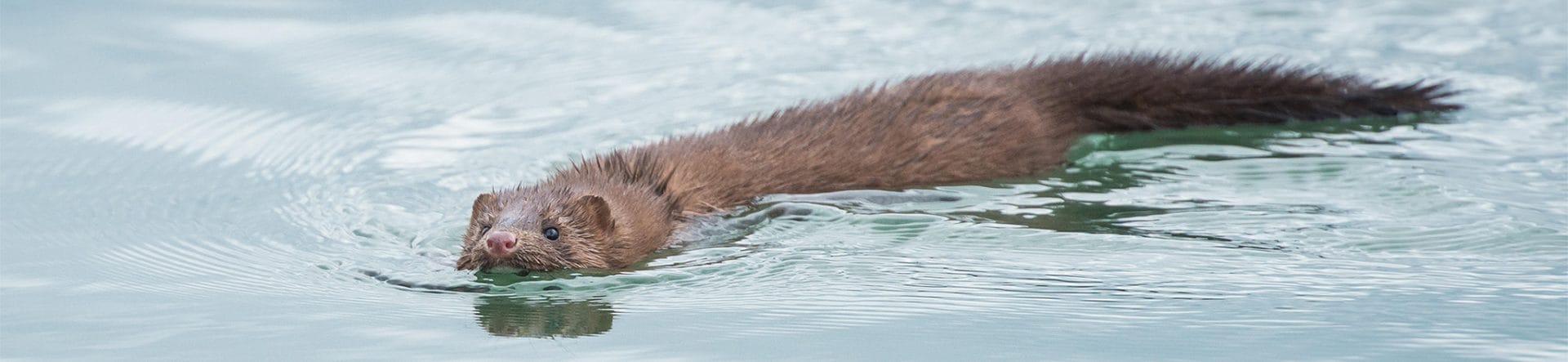
Feral American mink

The American mink has the greatest impact on native European mammals of all alien species. Feral populations are now established in more than 20 European countries.

Through competition for food, the invasion of the American mink in Europe has led the European mink to become critically endangered.

The invasion of American mink has driven the European mink to become critically endangered through competition for food. Feral American mink also severely affect ground-nesting birds, rodents, and amphibians. In the UK, predation by American mink has contributed to the decline of the water vole, the country’s fastest-declining mammal.

Economic costs

Removing invasive alien species or mitigating their impact comes with substantial economic costs. Based on regional programmes, eradicating American mink from the EU is estimated to cost around €79 million per year.

Legislative measures

The ecological harm caused by animals escaping from fur farms has prompted several countries, as well as the European Union, to restrict or phase out fur farming.

The EU has added American mink and raccoon dogs to its list of invasive alien species and, from August 2027, will legally prohibit the breeding and keeping of American mink across all Member States.

In 2006, Japan introduced the Invasive Alien Species Act to prohibit the establishment of new mink farms, in response to the damage feral mink were causing to native mink populations, local poultry farms, and fisheries. This legislation ultimately led to the end of mink fur farming in Japan in 2016.

In 2016, Spain implemented stricter regulations to safeguard local ecosystems, including a ban on new mink fur farms. Under Spain’s Strategic Plan for Natural Heritage and Biodiversity to 2030, the government committed to phase out mink fur farming entirely by 2030 to prevent further ecological damage.

More facts

Commission Implementing Regulation (EU) 2025/1422
Inclusion of the American mink to the list of Invasive Alien Species (IAS)

Environmental risk assessment of the invasive American mink (Mustela Vison)
Delivering Alien Invasive Species In Europe (DAISIE)

Recommendation No 189 (2016) for the inclusion of the American mink on the List of Invasive Alien Species of Union Concern
Convention on the Conservation of European Wildlife and Natural Habitats (Bern Convention)

The impacts of invasive alien species in Europe
European Environmental Agency (EEA)

Recommendations

In June 2025, the European Commission added the American mink (Neogale vison or Neovison vison, previously classified as Mustela vison) to the List of Invasive Alien Species of Union Concern, following the 2017 listing of the raccoon dog (Nyctereutes procyonoides). When the measure takes effect on 7 August 2027, EU Member States will be required to prohibit the breeding and keeping of American mink. The decision carries significant legal implications for the fur sector, as American mink make up for more than 90% of animals farmed for fur in the EU.

Some Member States, however, have indicated they may seek a derogation, a legal exemption that, if authorised by the Commission, would allow them to issue permits to continue mink farming. The Commission must act decisively to reject any attempts to sidestep the ban, which would only prolong ecological damage and animal suffering.